MuseArta
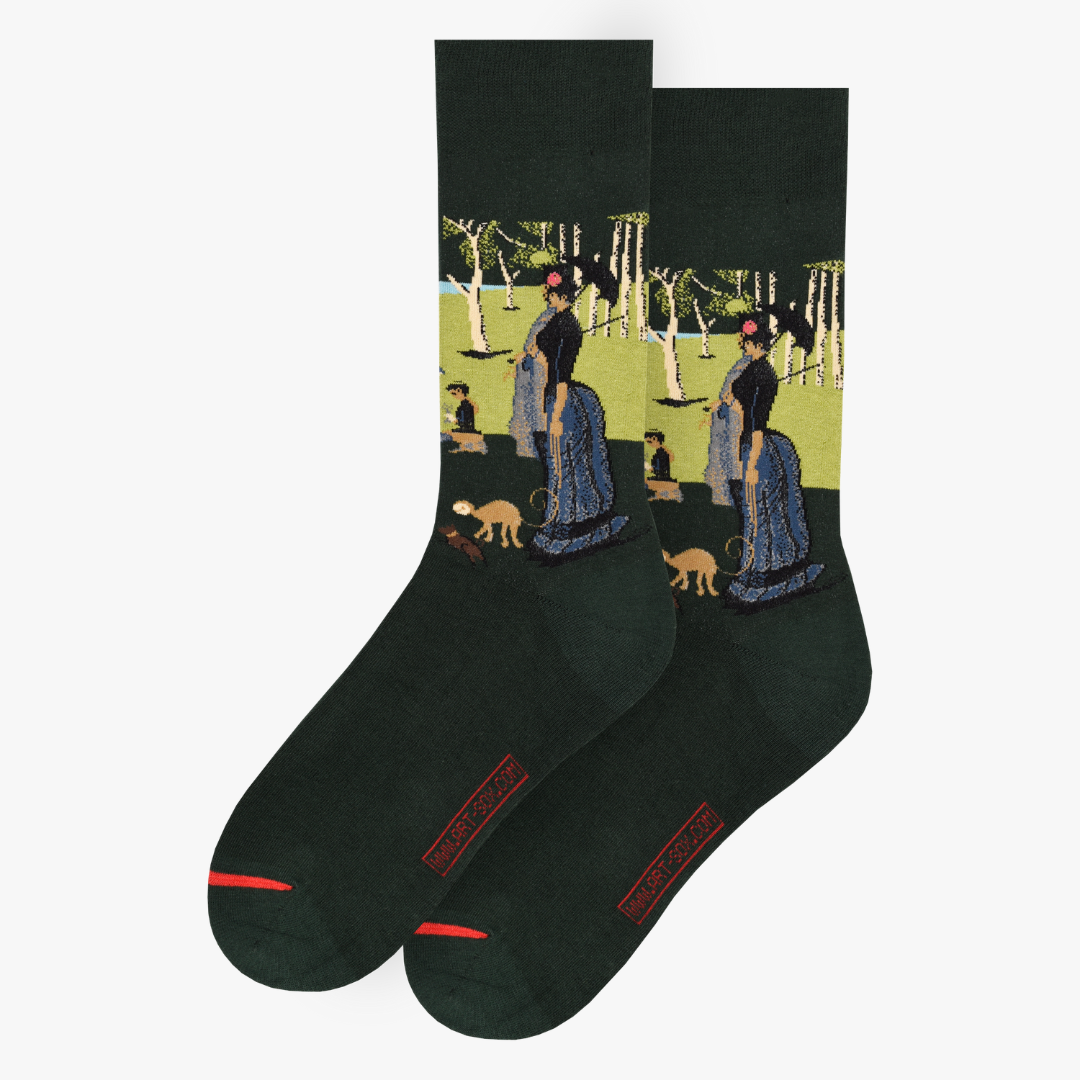
A Sunday on La Grande Jatte - Georges Seurat - Socks
A Sunday on La Grande Jatte - Georges Seurat - Socks
Couldn't load pickup availability
Inspired by pointillism, these socks echo Seurat’s masterful use of color and light for a refined artistic look.
Dimensions
Dimensions
About Golconda
About Golconda
About The Son of Man
About The Son of Man
About Girl with the Pearl Earring
About Girl with the Pearl Earring
About The Scream
About The Scream
About Woman with a Parasol
About Woman with a Parasol
About Bridge over a Pond of Water Lilies
About Bridge over a Pond of Water Lilies
About Garden at Sainte-Adresse
About Garden at Sainte-Adresse
About Water Lilies
About Water Lilies
About The Titanic
About The Titanic
About The Kiss
About The Kiss
About Self-Portrait with Monkeys
About Self-Portrait with Monkeys
About The Two Fridas
About The Two Fridas
About Meditative Rose
About Meditative Rose
About As You Like It
About As You Like It
About Lobster Telephone
About Lobster Telephone
About Burning Giraffe
About Burning Giraffe
About The Persistence of Memory
About The Persistence of Memory
About Flight of a Bee
About Flight of a Bee
About Nighthawks
About Nighthawks
About The Dragon
About The Dragon
About Tenma Bridge in Settsu Province
About Tenma Bridge in Settsu Province
About Fine Wind, Clear Morning
About Fine Wind, Clear Morning
About Peonies and Canary
About Peonies and Canary
About The Great Wave off Kanagawa
About The Great Wave off Kanagawa
About Café Terrace at Night
About Café Terrace at Night
About Starry Night Over the Rhône
About Starry Night Over the Rhône
About Irises
About Irises
About Bedroom in Arles
About Bedroom in Arles
About Sunflowers
About Sunflowers
About Starry Night
About Starry Night
About A Sunday Afternoon on the Island of La Grande Jatte
About A Sunday Afternoon on the Island of La Grande Jatte
Georges Seurat's masterpiece, A Sunday Afternoon on the Island of La Grande Jatte is a leading example of pointillist technique. It is a founding work of the Neo-Impressionist movement.
In his largest painting, Georges Seurat depicts people relaxing in a suburban park on an island in the Seine River called La Grande Jatte. Their stillness is as enigmatic as it is fascinating.
Highly criticized and ridiculed when first exhibited in Paris, this painting is now considered Georges Seurat’s greatest work. With scientific precision, he juxtaposed tiny dabs of colors that, through optical blending, form a single and, in his opinion, more brilliantly luminous hue.
About Johannes Vermeer
About Johannes Vermeer
About Edvard Munch
About Edvard Munch
About Leonardo da Vinci
About Leonardo da Vinci
About Georges Seurat
About Georges Seurat
Georges Seurat was a French post-Impressionist artist whose technique for portraying the play of light using tiny brushstrokes of contrasting colors became known as Pointillism. In a departure from intuitive Impressionism, he developed a structured, more monumental art to depict modern urban life, thus altering the direction of modern art by initiating Neo-Impressionism.
About Vincent van Gogh
About Vincent van Gogh
About René Magritte
About René Magritte
About Piet Mondrian
About Piet Mondrian
About Sandro Botticelli
About Sandro Botticelli
About Edward Hopper
About Edward Hopper
About Claude Monet
About Claude Monet
About Gustav Klimt
About Gustav Klimt
About Salvador Dalí
About Salvador Dalí
About Frida Kahlo
About Frida Kahlo
About Hokusai
About Hokusai
About Frank Lloyd Wright
About Frank Lloyd Wright
About CinqPoints
About CinqPoints
About Mon Petit Art
About Mon Petit Art
About Plego
About Plego